
The Moral Weight of Knowing
Operation NapoleonThis thread follows the burden of knowledge from the people who preserve a secret for decades to Kristín, who must decide whether truth is worth the risks imposed on the living.
increasing Bearing strength in each event
 decreasing
Bearing strength in each eventdecreasingA Brother Sent on a Mission
Responsibility Before Knowledge
A familiar pilot is chosen
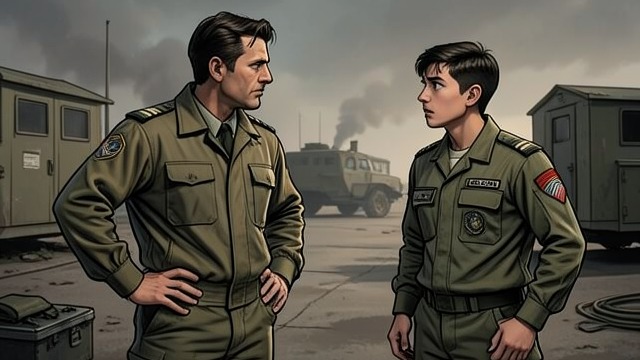
Robert Miller helps assign his brother William to pilot the German aircraft, believing the route and meeting arrangements will allow them to reunite in Iceland and continue to Argentina. Robert does not know the mission’s full design and assumes he is helping his brother undertake a manageable wartime assignment. That limited knowledge does not prevent him from bearing responsibility for the decision.
A lifetime of uncertainty
The aircraft disappears, and Robert spends decades searching for his brother without knowing whether he died in the crash or survived briefly on the ice. His professional role and personal grief become entangled: he has served the institution that keeps the aircraft secret, yet his own motive is to learn what happened to one person. The long search asks whether belated knowledge can repair a choice made under conditions of ignorance.
Silence as Loyalty
A Promise Preserves the Secret
Trust at the farm
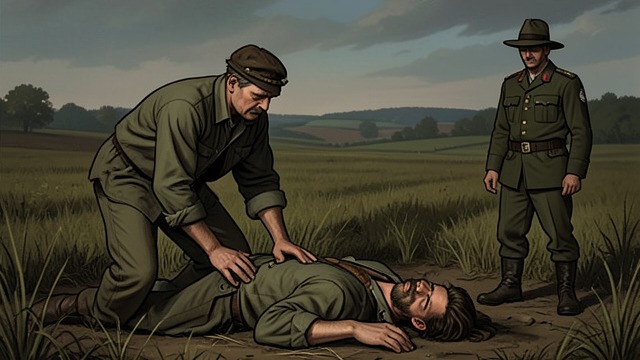
Jón and Karl assist Colonel Miller after the crash and accept his request not to disclose the true purpose of the military searches. They treat the promise as a personal obligation, not a political judgment about whether secrecy serves the public. When Jón later finds a German officer’s remains, he keeps the discovery and the officer’s papers to himself.
Loyalty becomes costly
The brothers’ discretion preserves Miller’s confidence, but it also keeps evidence from reaching investigators or the community. Jón’s decision shows how secrecy can be maintained through ordinary trust rather than only through force. By the time Kristín arrives, the old promise still has moral force, even though its consequences now sit beside the deaths and deception surrounding the new recovery.
A Professional Duty Without Moral Clarity
The Operator Learns Too Much
Following orders
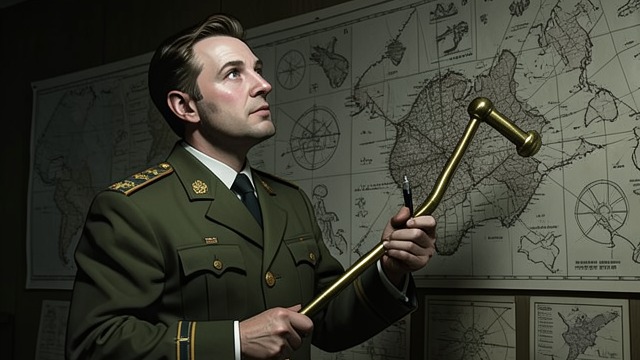
Ratoff initially treats the recovery as a task to complete and assumes that the aircraft will contain gold, weapons, or another familiar form of military cargo. When the plane yields only two gold crates and a briefcase of documents, he realizes that his superiors have misled him about the mission’s significance. Reading the papers makes the secret intelligible, but also makes him suspect that the operation was designed to leave him expendable.
Knowledge becomes leverage
Ratoff responds not with public disclosure or moral protest, but by trying to bargain for his life and money. His discovery reveals the danger of entering an institution’s hidden record: the information has value, but possession of it makes him a threat to those who control the operation. The scene complicates the idea that truth automatically liberates its discoverer; here it narrows his choices and accelerates the violence.
Kristín’s Refusal to Stop Asking
Knowledge Against the Threat
Seeking the facts herself
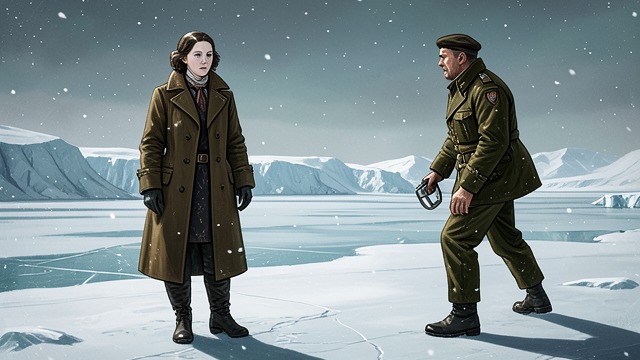
Kristín continues toward Vatnajökull despite the danger, wanting to see the soldiers and understand why the aircraft has brought violence into her family’s life. On the glacier, Ratoff uses the name Napoleon to interrogate and threaten her. She has only a damaged fragment of information, but she recognizes that the name matters to the people determined to silence her.
The cost of insistence
After Steve is killed, Kristín’s pursuit of the truth acquires a terrible personal consequence. Robert Miller tries to persuade her that knowing more will not help, while she believes she owes it to her brother and to Steve to understand what happened. Her persistence is not presented as a simple triumph: it keeps her alive long enough to learn more, yet cannot undo the losses or guarantee justice.
The Knowledge She Carries Home

Choosing What to Tell
Silence as self-preservation
Back in Iceland, Kristín has reason to fear the consequences of speaking openly about Operation Napoleon. Authorities reject the aircraft story, and Carr has warned that the people around her could be harmed. She does not tell the full account to the press or even to Elías and Júlíus, though the secret remains part of her private understanding of Steve’s death.
A delayed search for meaning
Years later, a fragment of damaged text points her toward Borne Island. Kristín’s journey does not deliver a complete explanation or public vindication; it ends with an inscription that suggests a grave and intensifies the mystery rather than closing it. Her decision to look is an ethical answer to silence, but the novel leaves open whether discovering more can compensate for the costs already paid.
1945, before William Miller’s final flight
From the 1945 search to Jón’s later years
January 2000, as Ratoff reads the recovered papers
30–31 January 2000, from Jón’s farm to the C-17
From the hospital aftermath to her later journey to Borne Island
